
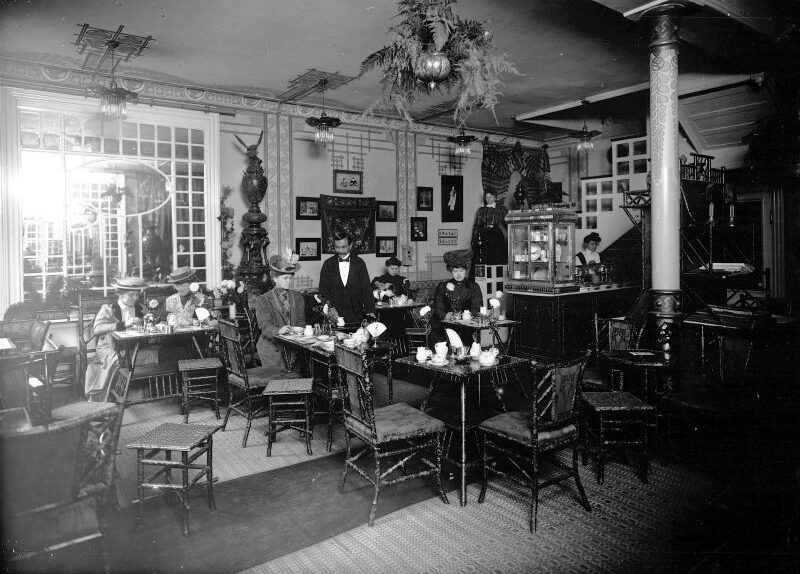
Research takes you far and wide, and as both Anna and her mother Agnes are women’s rights advocates, I wrote a post for International Women’s Day, which led me to read more and ended up in a tea room. Or rather – several.
The idea of tea rooms originated in Scotland, where Kate Cranston opened one in 1878. Her brother traded in tea and had previously set up chairs and tables in his shop, but it was Kate’s tea rooms – four in total – that started the phenomenon, which quickly became popular within the temperance movement.
Tea rooms were established rapidly because, with the temperance movement’s endorsement, it was not only acceptable – it was respectable – for women to own and run tea rooms, as well as for women to frequent them. So they did. In many hotels and restaurants, unaccompanied women were not allowed, as it was presumed they came to find company – for a price. But such suspicions never arose in connection with tea rooms. However, these suspicions did arise concerning cafes at the new department stores, which also appeared at the end of the 19th century. William Whitely sought permission to have a cafe in his new department store in Whitehall, but was denied on the grounds that it could lead to immoral arrangements.
Tea rooms became immensely popular in both Scotland and England – and even crossed the Atlantic, where the temperance movement was even stronger and also supported tea rooms, offering the possibility of cakes, lunches, and light refreshments without alcohol. And without intrusive men.
Chinese Tea Salon Came First in Copenhagen
Around 1900, foreign cultures were intriguing and influenced by how the tea room came to Copenhagen. On 12 December 1903, ‘Kvinden og Samfundet’ (Woman and society) reported that a Chinese tea salon had opened at Østergade 50, described as a patisserie:
“On Wednesday, 2 December, our first ‘Tea Salon’ after the English model (Østergade 50) opened in this city. Its proprietors are two ladies: Mrs. Matzen (Asian Tea Company) and Miss von Burgstedt. Mr. M. Troelsen is in charge of the patisserie. It is extraordinarily stylishly decorated with mirrors, white lacquered walls, Chinese furniture, and porcelain, and four genuine Chinese men dressed in Chinese silk trousers to serve. They offer lunch, all kinds of delicious cakes and pastries, and sandwiches, ice cream, and tea in various ways and of all sorts. The tea salon is next to Illum, from which shop a small staircase leads up to the salon. And it tempts many ladies, who are tired from shopping, to take a refreshment there – and as ladies are known to be easily tempted – surely not a few will succumb to the temptation.”
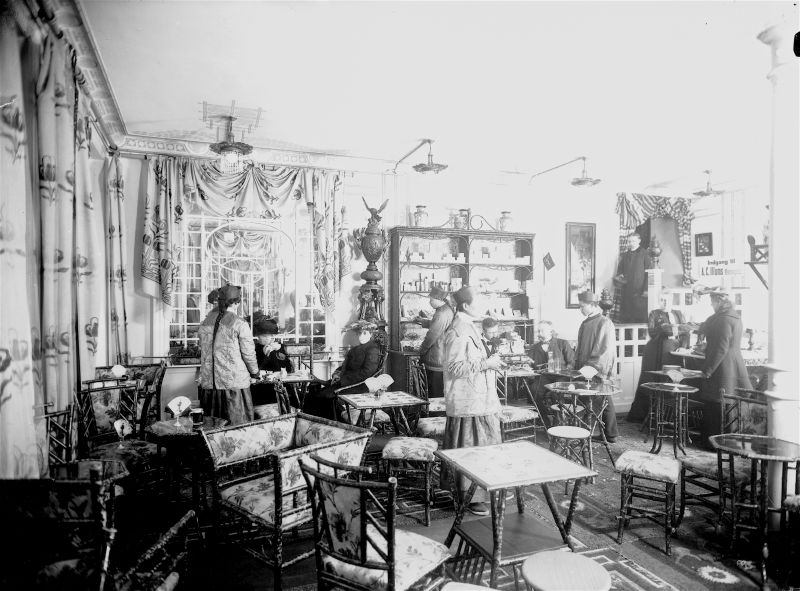
When you want real Chinese (foto: Elfelt, 1904)
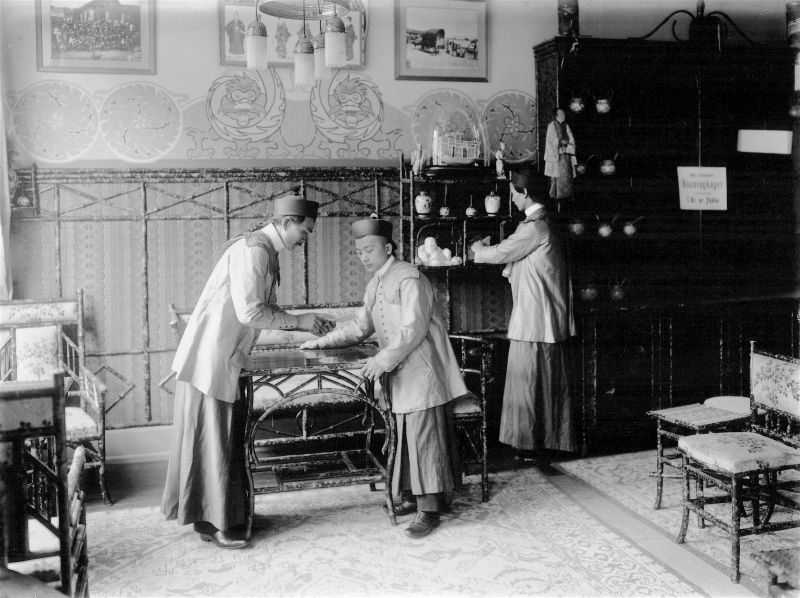
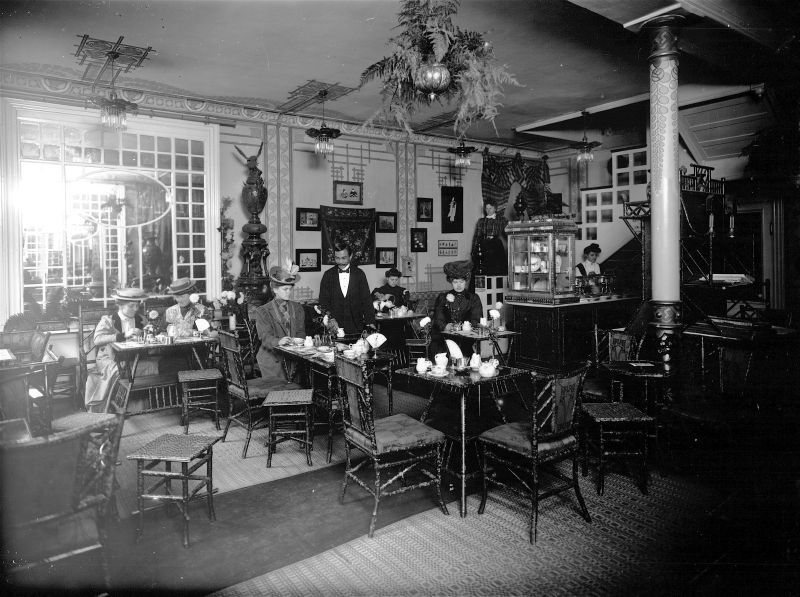
Illum bought the property in 1910 to expand the department store, and the tea room disappeared from the directory in 1918.
Tea and Suffrage
The women’s movement was, in a way, derived from the temperance movement, where many active women believed it was time for women to gain political influence. Initially, there were suffragists – women who fought for women’s suffrage using peaceful means. They met and drank copious amounts of tea and distributed pamphlets.
Larger meetings were also held in public assembly halls, which did not sit well with the authorities. Women’s assemblies with opinions and speeches were considered subversive activities, and the gatherings were stormed by the police, with women being beaten and imprisoned. Hence, women preferred tea rooms, where they could meet without it appearing as a formal meeting, and many tea rooms developed special groups of regular customers with various affiliations to the women’s movement. There were countless associations with all shades of steadfastness, religious affiliations, political views, etc., and since many tea rooms were often on the first floor, accessible via an ordinary staircase, it was not apparent who was coming and what they were doing.
Fire and Bombs
The suffragettes emerged – women fighting for women’s suffrage in a more forceful manner than through speeches and pamphlets. For some, the women’s cause became what they had long been accused and punished for, with window smashing, arson, and bombings planned in tea rooms like Lyons near Parliament Square. Some women became famous, like Emmeline Pankhurst, who, along with her daughter, was imprisoned more than 15 times and force-fed along with other women when they went on hunger strikes due to the absurd conditions and abuses. Meanwhile, they and other women met in thousands of tea rooms on both sides of the Atlantic to discuss women’s rights and other political issues.
For English women, however, it was the Boer War and World War I that ultimately led to them gaining the right to vote in 1918, after having taken on men’s jobs while they were at war – though initially only for women over 30 who owned property. It wasn’t until 10 years later that they received equal rights with men. In Denmark, women gained the right to vote in 1915 along with domestic servants.
Only a few Tea Rooms in Denmark
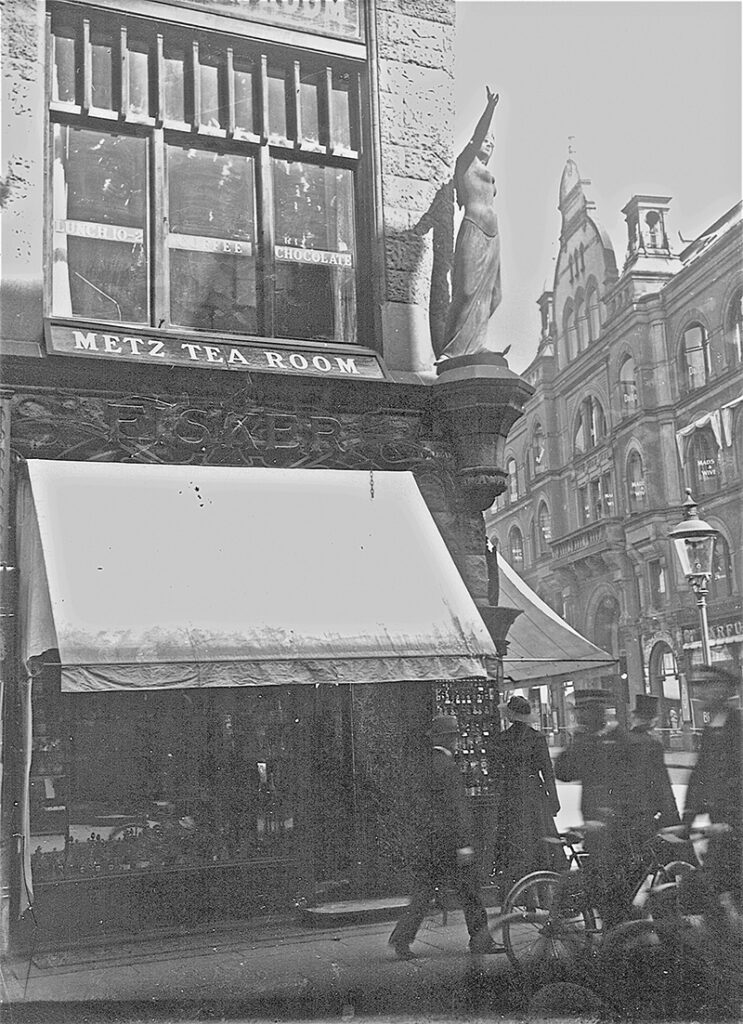
Copenhagen naturally got tea rooms too – including Metzes, linked to the company’s extensive tea trade. I dare not guess what the guests at Metz discussed, but surely they also talked about women’s rights in 1910. Some were probably referred to as tea salons, many like the one in Østergade as patisseries, but we often used English terms, so a tea room could be called a ‘tea room‘ – even in Copenhagen. And as ‘Kvinden og Samfundet’ wrote, one could get ‘lunch’.
We also have continental habits, so we drink coffee and have cafes and patisseries – long before 1900 – so teal rooms never became a staple on the Danish streets. Perhaps we were more accustomed to meeting in associations, where there was no need for tea rooms as meeting places. There were also numerous associations here, many of which were professional, such as the Domestic Servants’ Association. The temperance movement was never as prominent in Denmark as in other countries, including Sweden, and did not have the same impact here.
Tea rooms are still thriving in England and Scotland, where they still have many female guests but not exclusively – and they are no longer part of the temperance movement and women’s struggle but rather tourist attractions.